A Controller Oversight Service
Your systems should tell the same story.
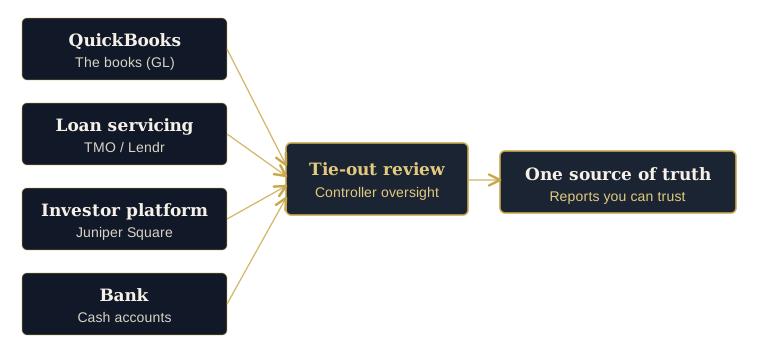
QuickBooks, your loan servicing platform, your investor platform, and your bank each hold a version of the truth. When they disagree, no report is fully trustworthy. The Financial Anchor reviews whether your systems agree, finds the gaps where they don’t, and helps bring them back into one story leadership can rely on.
You Don't Have a Data Problem. You Have an Agreement Problem.
Most real estate capital firms have plenty of data. What they’re missing is agreement. QuickBooks tracks the books. The Mortgage Office or Lendr tracks the loans. Juniper Square tracks investor capital. The bank holds the cash. Each system is accurate in its own world — but until they tie to one another, every report carries a quiet question mark.
QuickBooks doesn’t match your loan servicing reports.
Investor capital reports don’t clearly tie to the books.
Cash in the bank doesn’t reconcile cleanly to the general ledger.
Differences get “plugged” instead of explained.
You’re not sure which system to believe.
Reconciliation only really happens at year-end, under pressure.
Reconciliation only really happens at year-end, under pressure.
Drift is normal. Ignoring it isn't.
A fee gets recorded in the servicing system but never in the general ledger. A payoff hits the bank before it’s booked. Month after month, the gap widens — until no one is quite sure which number is right.